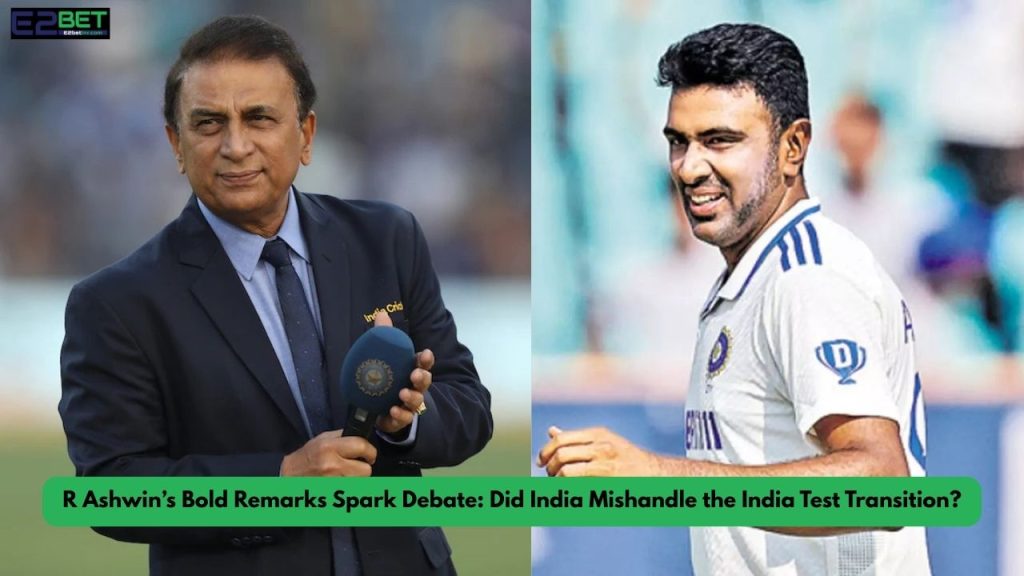
The debate around the India Test Transition has intensified after R Ashwin claimed that he, Kohli, and Rohit could have groomed the next generation with proper clarity. India’s 0–2 home defeat to South Africa triggered questions about selection choices and senior players’ exits. While Ashwin stresses the lack of communication, Sunil Gavaskar counters that retirement was their personal call. This article explores both sides of the India Test Transition debate.
Ashwin vs Gavaskar: The Real Story Behind the India Test Transition Debate
India’s surprising 0–2 Test series loss at home to South Africa has raised urgent questions about the India Test Transition. The defeat has exposed gaps in team planning, leadership clarity, and experience management. As India rebuilds after the exits of Virat Kohli, Rohit Sharma, and Ravichandran Ashwin, the conversation around the India Test Transition has taken center stage.
Ravichandran Ashwin ignited the controversy with a striking statement on his YouTube channel. According to him, he, Rohit, and Kohli could have groomed younger players and ensured a smoother shift to the next phase of Indian cricket. Ashwin said that a lack of clarity about their future in Test cricket pushed them to retire earlier than expected. He emphasized that India has historically struggled with knowledge transfer, something he believes could have strengthened the team during this transition.
Ashwin stated:
“There must be a pathway for transition. When there is no clarity, decisions become individualistic. Virat could have groomed players. Rohit could have done that. I could have done that.”
Many fans agree with Ashwin, believing that if the seniors had stayed longer, India might not have crumbled in the South Africa series. But legendary batter Sunil Gavaskar has a completely different view.
Gavaskar’s Strong Counter: “Retirement Was Their Own Call”
Sunil Gavaskar responded firmly, dismissing claims that the senior trio was pushed out. According to him, retirement was a personal decision, and the management should not be blamed. He further argued that their presence earlier did not always guarantee success. Gavaskar cited India’s 0–3 loss in New Zealand and tough defeats in Australia while the seniors were still part of the squad.
Gavaskar said:
“We can’t assume India would’ve won if they were here. They were there when India lost 0–3. Retirement is their call; we should not think they were forced out.”
His words highlight the complexity of the India Test Transition, suggesting that the team’s struggles are not solely linked to senior players’ exits.
What Lies Ahead for India’s Red-Ball Future?
With Ashwin retiring from all formats and ongoing speculation about Rohit and Kohli’s ODI future, India faces a crucial rebuilding phase. The Test format, in particular, requires balancing youth and experience to regain dominance at home and abroad. The India Test Transition is still unfolding, and how the management handles upcoming selections will determine India’s long-term success in red-ball cricket.
READ MORE: Top 5 Biggest and Best Cricket Stadium Giants: India’s Most Powerful & Iconic Cricket Arenas
FAQ
What is the main issue in the India Test Transition debate?
The main issue is whether senior players like Kohli, Rohit, and Ashwin were phased out too early, impacting India’s recent Test performance.
What did R Ashwin say about the transition?
Ashwin said that he and the other senior players could have groomed younger cricketers if there had been more clarity about their futures.
How did Sunil Gavaskar respond?
Gavaskar insisted that retirement was the players’ personal decision and that their presence doesn’t guarantee victories, citing past losses.
Why did the controversy resurface now?
India’s 0–2 home defeat to South Africa exposed gaps in the transition process, renewing the debate over team decisions.